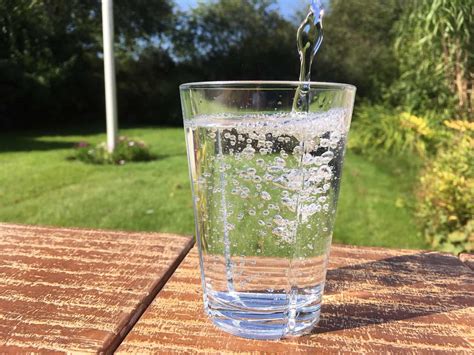
pesticide residues in drinking water
Of course, we should ban the spraying of toxic chemicals on the land above our drinking water.
When the issue is raised and becomes a central part of the election campaign, there is still reason to look at both the arguments and the purpose of the various proposals. My experience with this kind of thing is that, after an election, it will, at best, be sent to a committee consisting of lobbyists who will pick apart the arguments and conclude that they do not hold water and that the proposal should therefore not be implemented. That's why I think the green parties need to use the right arguments to achieve the right goals.
Looking at the proposal to introduce a ban on spraying in drinking water zones, it is worth noting that this does not concern the largest part of the groundwater, which is not used for drinking water and simply flows around in nature. The discussion concerns only the part of the groundwater that is extracted for drinking water. But what is the argument? Focusing specifically on drinking water must be based on health considerations, unless one is concerned about guppies in private aquariums. The health argument in relation to drinking water simply does not hold water, because 99.9% of the pesticides that we Danes consume do not come from drinking water, but from food. The limit values for pesticide residues in food are around 1,000-10,000 times higher in food than in drinking water, and are exceeded far more frequently than the limit values for drinking water. Therefore, the pesticide content in drinking water is completely irrelevant to public health as long as it is permitted to eat conventional foods, and even organic products often contain more pesticide residues than drinking water alone due to contamination from rainwater and other sources.
I am not claiming that agriculture can simply spray away for this reason, because pesticide residues in watercourses, lakes and coastal waters pose a serious problem for algae, fungi and other organisms that are far more sensitive to pesticides than humans are. Pesticides are specifically designed to be toxic to microorganisms, plants and insects, while being as non-toxic as possible to humans. Therefore, pesticide residues in the aquatic environment are primarily an environmental problem, not a health problem.
If you want to do something about the Danes' intake of pesticide residues, and there is good reason to do so, then you need to tackle pesticide residues in food. A single conventionally produced apple contains more pesticide residues than all the water you can drink in a whole year. A single organic farm producing organic fruit and vegetables will save Danes from far more pesticide residues than a ban on spraying in drinking water zones.
And that is why the focus is wrong when the green parties want to protect drinking water from pesticides, because we will have to fight hard to get it through, but it will have virtually no effect on the health problem of our intake of pesticide residues, nor will it reduce the environmental problem of pesticides' impact on biodiversity, as it only covers the small part of agricultural land used for water extraction.
When Lars Løkke and the Social Democrats have to set up a commission to look into the costs of a spraying ban in drinking water zones, they will conclude that the measure does not meet the objective and that, therefore, no changes should be made to agriculture's insane consumption and pollution with pesticides this time either.
The well-intentioned proposal for a ban on spraying in drinking water zones is therefore primarily of symbolic value, which will cost a lot of political effort to implement, but which will not solve the real problems of pesticide pollution.
Translated with DeepL.com (free version)
Comments
Be the first to share a thought
Start the conversation with a thoughtful response.
Join the conversation
Sign in to leave a comment and keep the discussion flowing.
Further reading

I applause the increase of oil prices!
It is always tragic when people die, whether they are an ayatollah, a soldier, or a civilian, and it is repulsive to wit...
Venezuela
The US has bombed Venezuela and captured Maduro. What should one think about that? Most people already hate Trump anyw...