Seeds, genocide and our common future
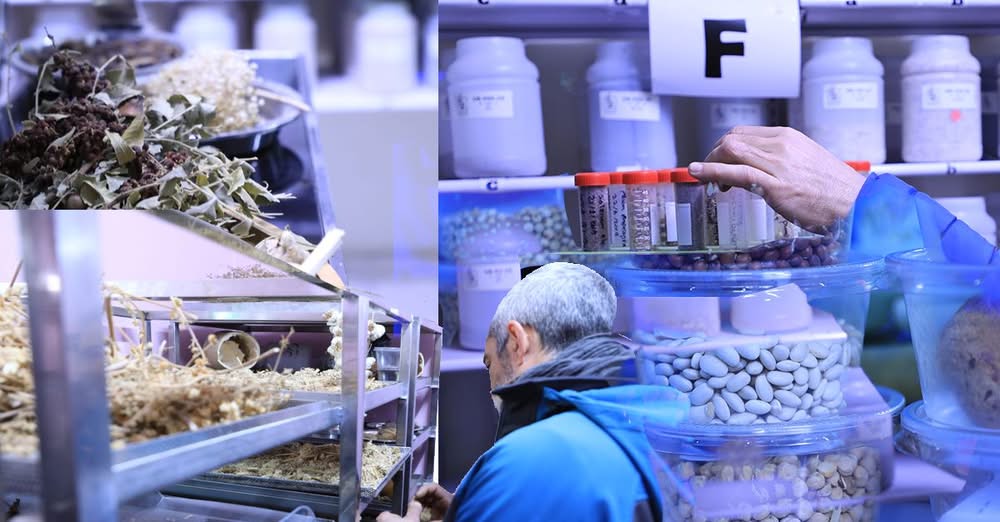
Seeds, genocide and our common future Israel has resorted to yet another tactic in the ongoing genocide in Palestine, where attacks are not only about killing as many people as possible, but also about preventing any possibility of rebuilding Palestinian society. The media naturally focuses most on the people who are killed in the bombing of hospitals and the killing of desperately hungry children queuing for food distribution in Gaza. But there is also something else going on behind the scenes. Killing civilians is bad enough in itself, but these are often incidents that the Israeli authorities try to excuse by saying that mistakes happen and that in war there will always be innocent victims. One incident that cannot be explained away as a mistake is the destruction of the Palestinian gene bank in Hebron on the West Bank, established by the Union of Agricultural Work Committees (UAWC). On 31 July, Israeli bulldozers drove in and destroyed the entire gene bank, including the seed production fields established around it. And why, one might ask, is Israel doing this, and what does it have to do with genocide? It is only in an industrialised country like Denmark that people ask such questions. Throughout most of world history, and still in large parts of the world, people understand very well how seeds are inextricably linked to survival. The UN Charter of Human Rights states that access to food is a human right. This is one of the many human rights that Israel is currently violating in Gaza by using hunger as a weapon against the population. However, access to food is also guaranteed by the UNDROP treaty, which defines access to seeds as a human right, because without seeds you cannot grow plants, and without plants you cannot obtain food unless, like us, you are rich enough to buy food. Around 70% of all food in the world is grown locally for self-sufficiency, so access to seeds is absolutely central to the world's food supply. That is why access to seeds and the right to produce one's own seeds are enshrined in the UNDROP treaty as a human right. Under pressure from Danish seed company lobbyists, Denmark abstained from voting on the treaty, but as we know, human rights apply everywhere in the world, even if a regime in Israel, North Korea or Denmark believes that human rights rules should not apply to them. Israel has introduced a law that automatically revokes Palestinians' property rights to their land in the occupied territories if the land is not actively cultivated. If the land has not been cultivated for three years, Jews can, by law, simply take over the land and establish more settlements. If the Palestinians do not have water for irrigation or seeds to plant, they cannot cultivate the land, and Jewish settlers can then drive out the Palestinian population. Since Israel controls the water, the Palestinians have established a gene bank with, among other things, old local varieties that can cope better with periods of drought. Israel's destruction of the West Bank's only seed bank is thus clearly intended to prevent local food supply with a view to annexing the land for new Jewish settlements as part of the ethnic cleansing of the Palestinian population in the West Bank. It is a slower strategy for ethnic cleansing than killing the population and razing homes and all infrastructure, as we are seeing unfold in Gaza right now, but no less effective, and with far less media attention in the United States, Denmark and other countries that support Israel directly or tacitly. Some may argue that it is worse to create famine in Gaza and kill children queuing for emergency aid than it is to destroy a gene bank, but I am not so sure. In the long term, the destruction of the gene bank may well cost more lives than the bombing of Gaza. It will just be in the long term. Palestine is part of the ‘Fertile Crescent’ in the Middle East, which was the cradle of the world's first agricultural culture 11,000 years ago. 80% of all cultivated plants in the world originate from this area. Landraces from this area are therefore the most important source of the world's genetic diversity of cultivated plants, and without genetic diversity, it will not be possible to breed new plant varieties in the future. The future of global food production depends on the genetic diversity preserved in local gene banks around the world, including the UAWC gene bank in the West Bank. In the Nordic region, we have NordGen, which preserves plants originating in the Nordic region, but the genetic diversity in NordGen is very small because very few of the world's cultivated plants originate in the Nordic region. In order to save money, NordGen only preserves very few plant varieties from outside the Nordic region, as international treaties only require the preservation of local seeds, while the responsibility for preserving seeds from other countries is left to those countries, and they v
Comments
Be the first to share a thought
Start the conversation with a thoughtful response.
Join the conversation
Sign in to leave a comment and keep the discussion flowing.
Further reading

I applause the increase of oil prices!
It is always tragic when people die, whether they are an ayatollah, a soldier, or a civilian, and it is repulsive to wit...
pesticide residues in drinking water
Of course, we should ban the spraying of toxic chemicals on the land above our drinking water. When the issue is raised...